Scene 2 – Midian

Exile. Revelation. A New Calling.
In Miriam’s Story, Scene 2 takes us to the quiet, humble life of Moses in the land of Midian—a place far from the palace, far from Egypt’s grandeur, and far from the life he once knew. This is a moment of personal transformation, where Moses is no longer the prince of Egypt, but a man in exile, living a simple, yet peaceful life on a family farm.
The Life in Exile
Moses, now a shepherd, works alongside his wife Zipporah and her father on the farm. The music begins softly, reflecting the pastoral calm of this new life. The melodies are gentle, and Miriam’s voice adds a sense of reflection, conveying Moses’ sense of peace, yet also the quiet longing for something greater.
Moses is no longer the angry young man fleeing Egypt, but a man who has found solace in the routine of the desert. He has married Zipporah, and together they live in the wilderness, away from the burdens of his past.
Yet, the silence of the desert does not last forever. Something is stirring in the air — something beyond Moses’ understanding.
Exile – Exile. Revelation. A New Calling.
In Scene 2 – Midian, the oratorio captures a pivotal moment: the quiet exile of Moses is shattered by a divine encounter, revealing a new path. It is the beginning of Moses’ transformation from a man running from his past into a leader with a new, undeniable purpose — a leader who will change the course of history.
Scene 2 – Excerpt 1
Midian atmosphere
Scene 2 – Excerpt 2
Moses in reflection
Scene 2 – Excerpt 3
Inner conflict
Scene 2 – Excerpt 4
Revelation begins
Scene 2 – Excerpt 5
The calling intensifies
Scene 2 – Excerpt 6
Transformation and acceptance
Oratorio – Resources for sale & hire
Terms *
- Audio files of complete oratorio Free on booking performance
Hire: - All scores must be devoid of marks on return.
- Hired vocal scores and chorus only scores may be hired and retained, the financial difference between hire cost and purchase price can be paid instead of returning the physical scores.
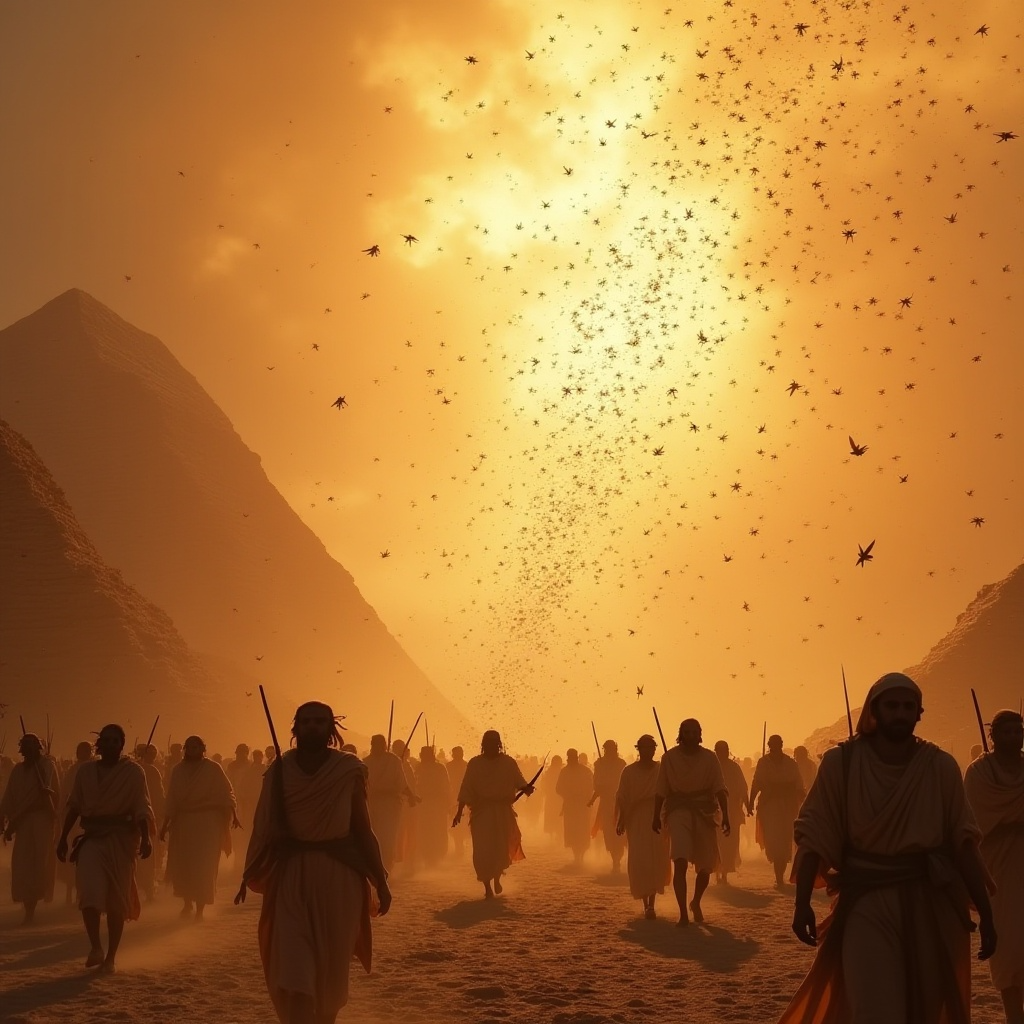
The Children of Israel reach the shores of the Red Sea.
The Burning Bush
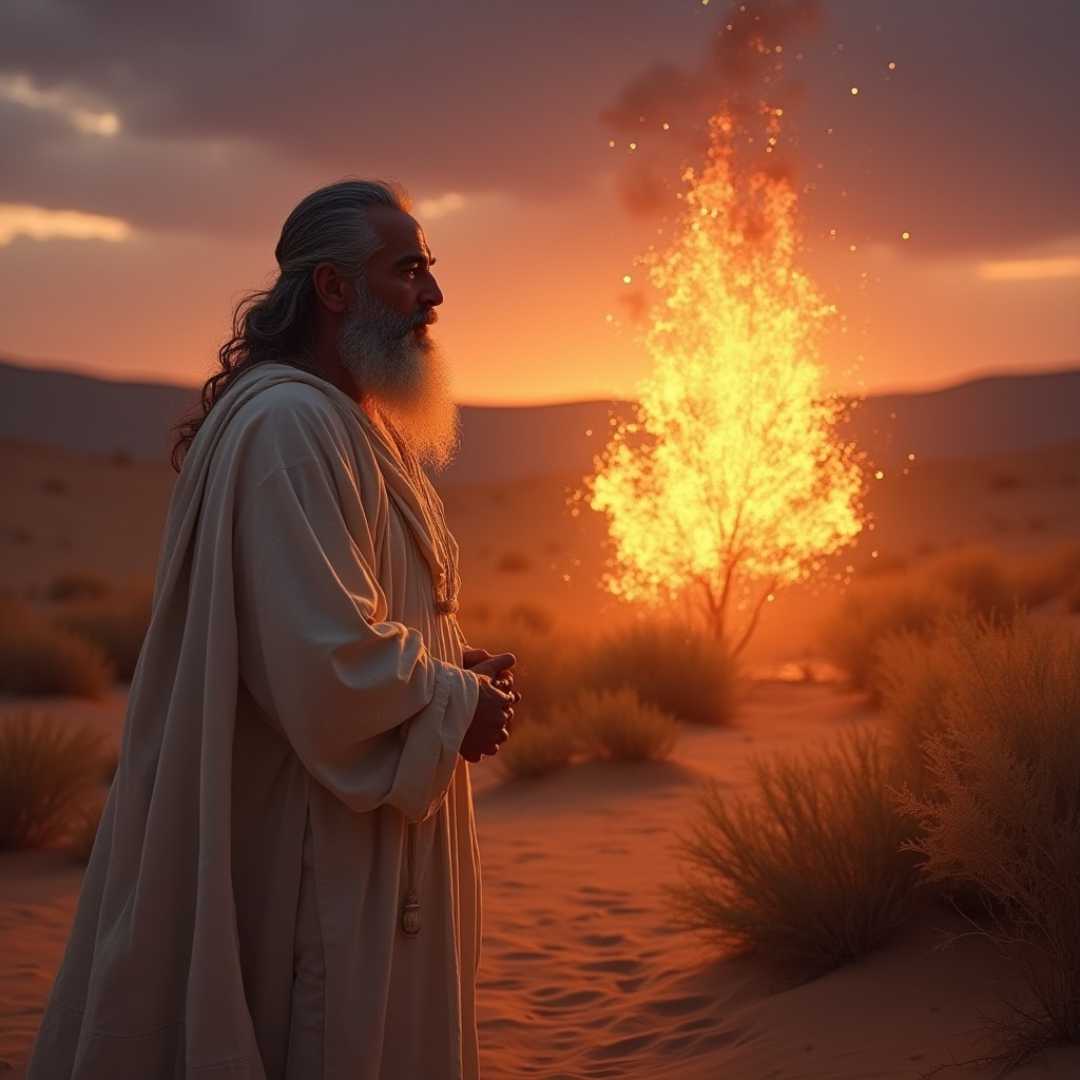
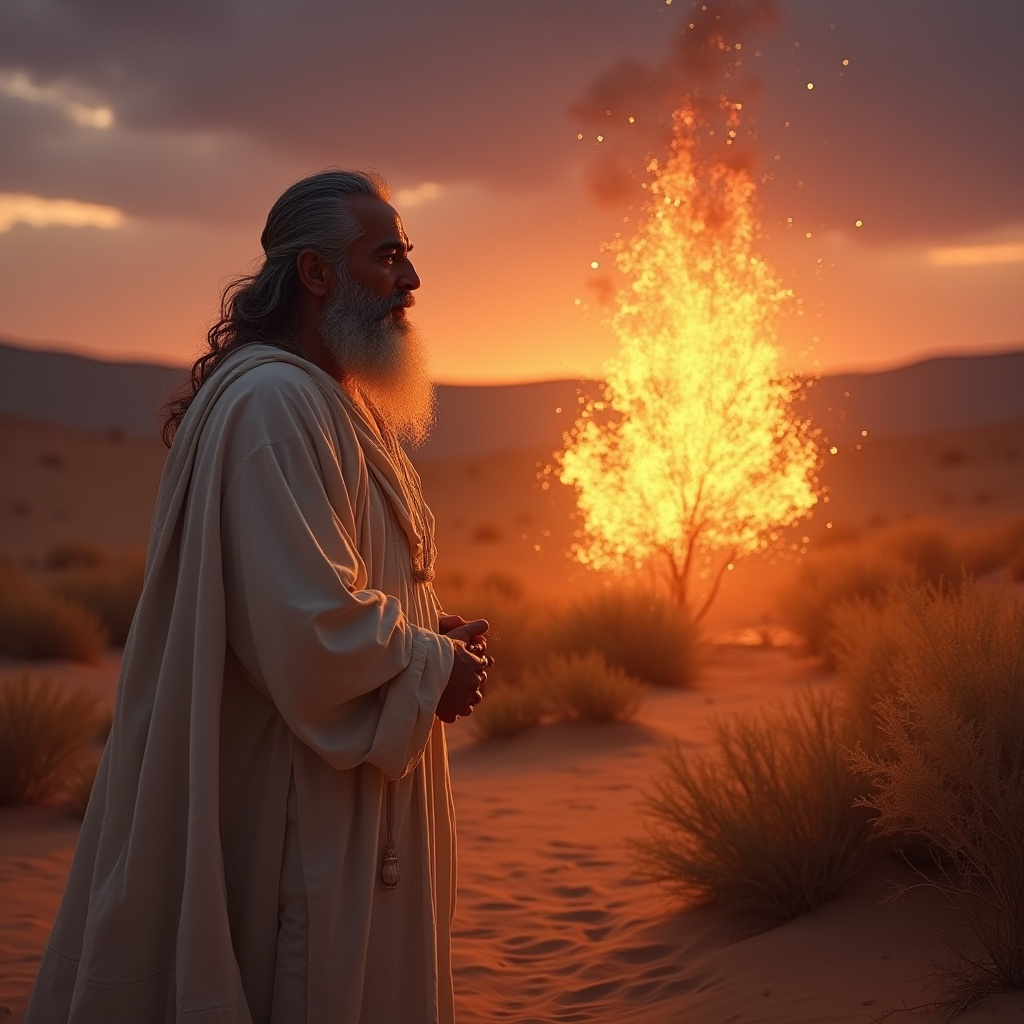
One day, as Moses tends to his flock, he comes across a burning bush — an impossible sight. The flames consume the bush, yet it remains unburned. The music swells with awe and wonder as this miraculous sight unfolds. Strings build in anticipation, followed by a crescendo of brass and choral harmonies, representing the mystical nature of this divine encounter.
It is here, in the midst of the wild desert, that God speaks directly to Moses. The voice is powerful, yet full of compassion, a call that shakes Moses to his core. Through Miriam’s perspective, we feel the deep sense of awe, fear, and confusion that Moses experiences.
God tells Moses that it is time to return to Egypt — time to face the very land that once exiled him. He is chosen to lead the Children of Israel out of slavery. This moment of divine revelation is a dramatic turning point in Moses’ life. The music transitions from uncertainty to determination, marking Moses’ reluctant acceptance of his new calling.
The Pharaoh’s Death
As the bush continues to burn, God reveals a crucial piece of information: the old Pharaoh — the one who had once sought Moses’ life — has died. His son, who grew up alongside Moses as his step-brother, now reigns over Egypt. This revelation adds complexity and tension to Moses’ mission. The Pharaoh is no stranger; he is a family member, a link to Moses’ past, and the one who must be persuaded to release the Hebrews from bondage.
The music shifts, adding an element of conflict. The sound of a distant drumbeat represents the impending confrontation — the reawakening of Moses’ past and his return to the world he tried to forget.
A Reluctant Prophet
Though Moses hears God’s call, doubt creeps in. In a moment of hesitation, he questions his own abilities. “How can I, a man in exile, be the one to free the Hebrew people?” Miriam’s voice carries Moses’ reluctance, reflecting the fear and uncertainty that plague him. The orchestration softens here, with delicate woodwinds mirroring Moses’ inner struggle.
But God’s voice reassures him, promising that He will be with Moses every step of the way. The tension builds, slowly transforming into a surge of newfound purpose and resolve. Moses, now a shepherd of sheep, will soon become a shepherd of nations.
The Call to Action
Scene 2 concludes with Moses standing before the bush, transformed. The flames continue to burn, but Moses no longer sees the fire as something to fear. Instead, he sees it as a divine sign — a calling to action.
Through Miriam’s narration, the music carries a sense of inevitability. Moses may have fled Egypt, but he cannot escape his destiny. The fire that once consumed the bush now consumes Moses’ heart, and he prepares to embark on the most difficult journey of his life.